
Constipation and Digestive Health | A Herbalist Approach.

Make it stand out
Whatever it is, the way you tell your story online can make all the difference.
Regular elimination is a core foundation of health. As a herbalist in Dublin, I often see people struggling with constipation without realising its impact on overall wellbeing. In herbal medicine, constipation is understood as a sign of imbalance in digestion, hydration, nervous function, diet or bowel tone. When elimination is inefficient, waste accumulates in the body, affecting energy, skin, mood and vitality.
Herbal medicine offers gentle, personalised support to restore healthy bowel function naturally, without creating dependency.
From a herbalist perspective, cleansing and restoring the lower intestinal tract is paramount to rebuilding health and vitality. Ideally, bowel movements should occur twice a day.
Below are natural, herbal ways to support healthy bowel function.
Bespoke Herbal Medicine for Constipation. Restoring rhythm, tone and vitality.
One of the most effective ways to address chronic constipation is through a bespoke herbal bowel formula, prepared by a herbalist.
A herbal regulatory bowel powder is a healing and cleansing tonic composed of carefully selected medicinal plants. It is designed to support bowel function gently and progressively, without forcing elimination.
This type of formula is particularly suited to people with long-standing constipation, and it works by:
Encouraging regular bowel movements
Cleansing accumulated waste
Healing and toning the intestinal lining
Supporting healthy intestinal flora
Rejuvenating digestive organs
As bowel function improves, people often notice a reduction in associated symptoms such as headaches, fatigue, bloating or heaviness.
How are the herbs chosen
Herbal formulas are individualised. The choice of herbs depends on the person’s symptom picture, constitution, age and general state of health.
Herbs are selected according to the action needed, such as:
Soothing and protecting the bowel lining where there is irritation or inflammation
Supporting gentle cleansing and elimination
Stimulating bile flow from the liver and gallbladder
Toning the muscular wall of the intestines
Each herb has a specific role, and when combined thoughtfully, the formula works as a complete healer for the bowels — addressing the root cause rather than suppressing symptoms. Importantly, these formulas support the bowels to resume their own natural rhythm, without creating a laxative habit.
Herbs Commonly Used in Bowel Formulas
Depending on the individual, a formula may include:
Demulcents such as Slippery Elm (Ulmus rubra) or Marshmallow root (Althaea officinalis) to soothe, protect and soften irritated mucous membranes.
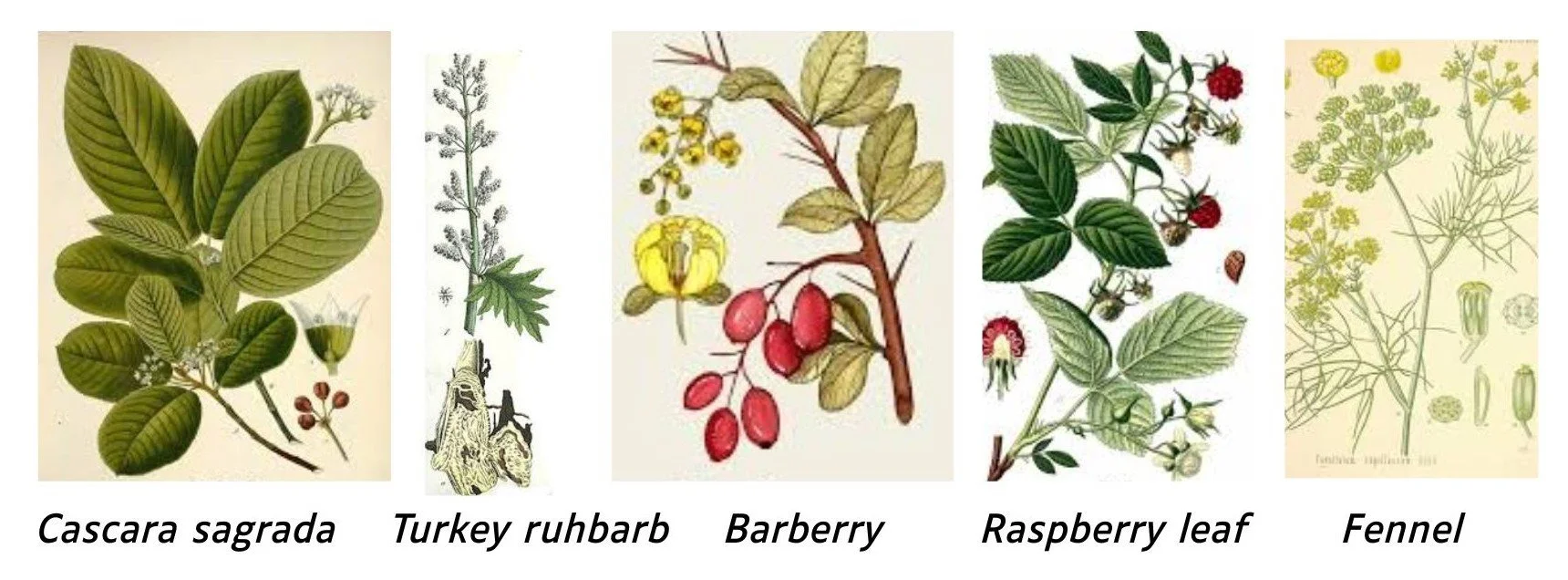
Cascara sagrada (Frangula purshiana), a mild, safe laxative that tones the peristaltic muscles of the bowel when used correctly.
Barberry (Berberis vulgaris) to stimulate bile flow from the liver and gallbladder — bile being the body’s natural laxative.
Red Raspberry leaf (Rubus idaeus), an iron-rich astringent that tones tissues and supports membrane health.
Turkey Rhubarb (Rheum palmatum), a mild laxative and stomachic, especially useful where irritating substances are present in the intestines.
Fennel (Foeniculum vulgare), a carminative to relieve cramps, spasms, flatulence and digestive discomfort.
Ginger (Zingiber officinale), to warm digestion, relieve pain and flatulence.
How to Take a Herbal Bowel Formula
The herbs are provided in powder form to mix with a little bit of water. Begin with less than half a teaspoon, taken 10 minutes before the main meal of the day, for approximately four weeks.
Observe how your body responds and increase the dose gradually if needed. Consistency is key. In most cases, it is important to complete at least one month of bowel support, alongside dietary and lifestyle changes, before moving on to other protocols.
Supporting the Bowels Naturally
Herbal medicine works best when combined with simple daily practices:
Hydration
Drink around 2 litres of water daily. Begin the day with warm water, then sip regularly throughout the day. Adequate fluids are essential, especially when increasing fibre intake.
Gentle Movement
Daily walking (20–30 minutes), yoga, and gentle stretching help stimulate bowel activity and lymphatic flow.
Fibre from Whole Foods
Introduce fibre gradually:
Eat a variety of fresh fruits and vegetables.
Freshly ground or soaked flax seeds (linseeds): start with 1 tsp daily, increasing to 1 tbsp if tolerated well.
Psyllium husk powder: ½–1 tsp in a full glass of water, followed by another glass of water.
Unsweetened fruit and vegetable juices also support elimination. Try a glass of prunes juice in the morning.
Establish a Bowel Routine
By selecting the same bathroom time every day, for instance, after breakfast.
Stress & the Gut
Stress has a profound effect on digestion. Support the gut through slow breathing, relaxation, and allowing unhurried time for elimination.
Mindful Eating
How we eat matters. Eat slowly, chew thoroughly, and avoid drinking during meals. Relax, slow down and create a calm environment around eating.
Focus on consistency without pushing your body. Supporting the bowels is about restoring rhythm, tone and balance.
If you have any queries or would like to make an appoinment, you can get in touh on my web contact page.
Keep well and natural!
Lola Lara
Supporting Health Naturally
-------------------------
This information supports wellbeing and intends to inspire you to take an active role in your health. It does not replace medical advice.
